The production of series and films for TV and VOD
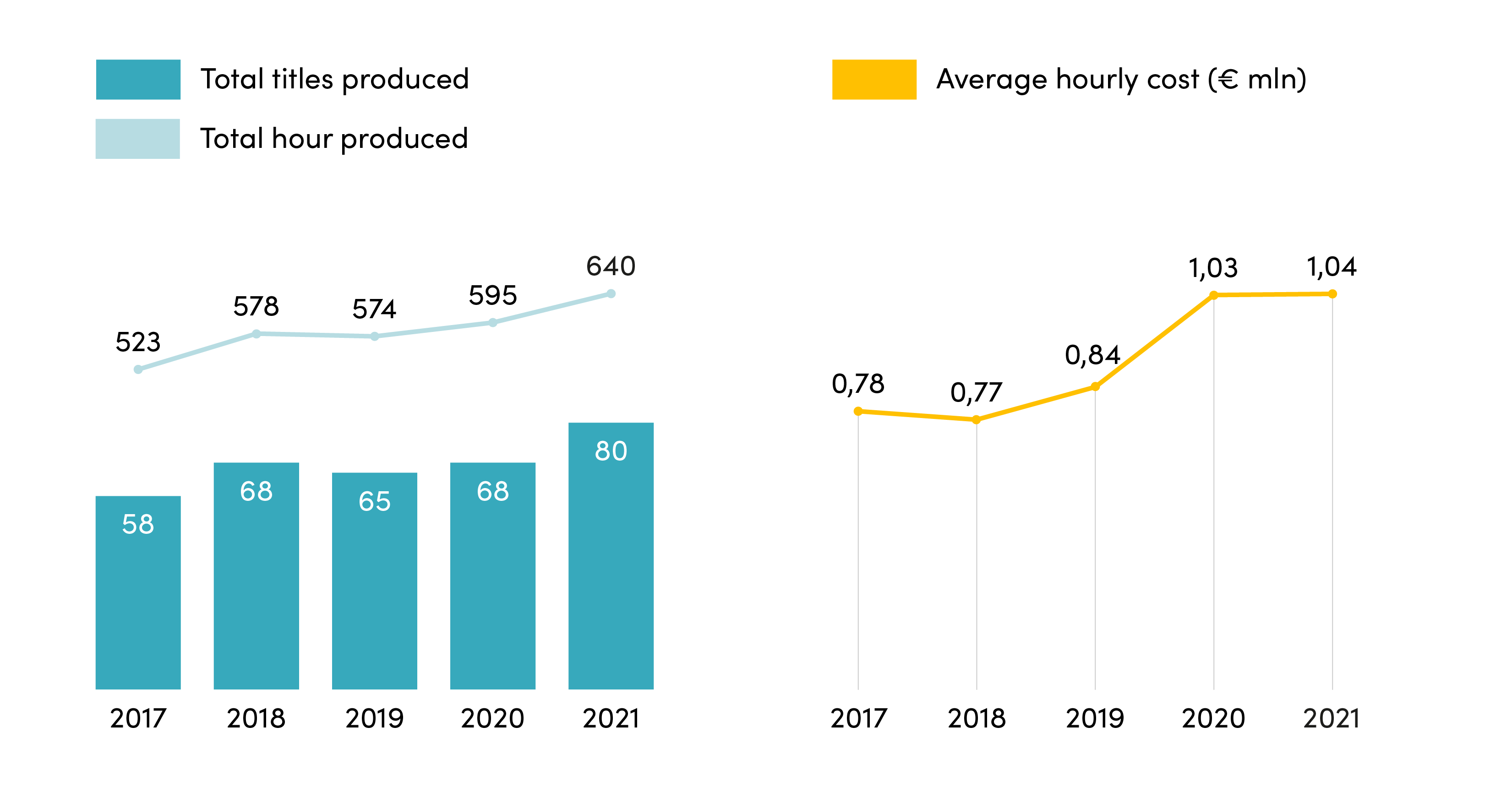
Produced volume and titles, hourly cost of TV-VOD series and films:
(unit and € mln at nominal values)
Source: eMedia for APA
The increase in demand, mainly generated by the growth of the SVOD (Subscription Video On Demand) market, has led to an increase in the number of titles and hours produced.
Between 2017 and 2021 there has also been an increase in the average hourly cost due in part to the effects of the Covid-19 pandemic and the increase in the number of higher-budget titles, also because created and produced for the international market.
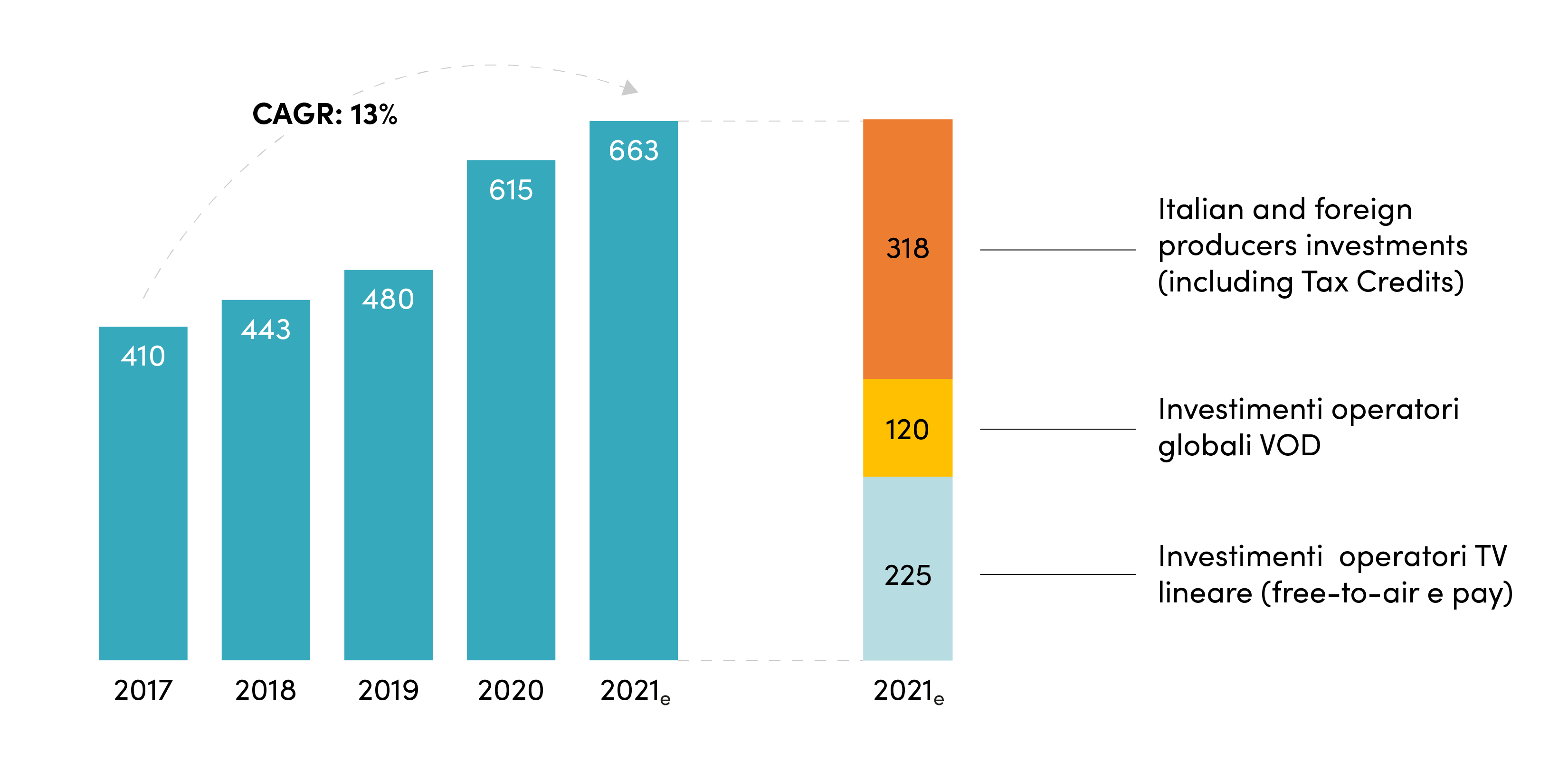
TV-VOD series and film investments
(€ mln at nominal values)
Source: eMedia for APA
Investments in series and film production for TV and VOD have increased between 2017 and 2021 at a compound annual rate (CAGR) of 13% thanks to the increase in demand and the increase in audiovisual tax credit.
In terms of demand, linear TV operators are the main players with a €225 mln investment, followed by GVD operators with approximately €120 mln, constantly increasing. Domestic and foreign producers contribute to the value of production with approximately €318 mln, mainly as a result of tax credit.
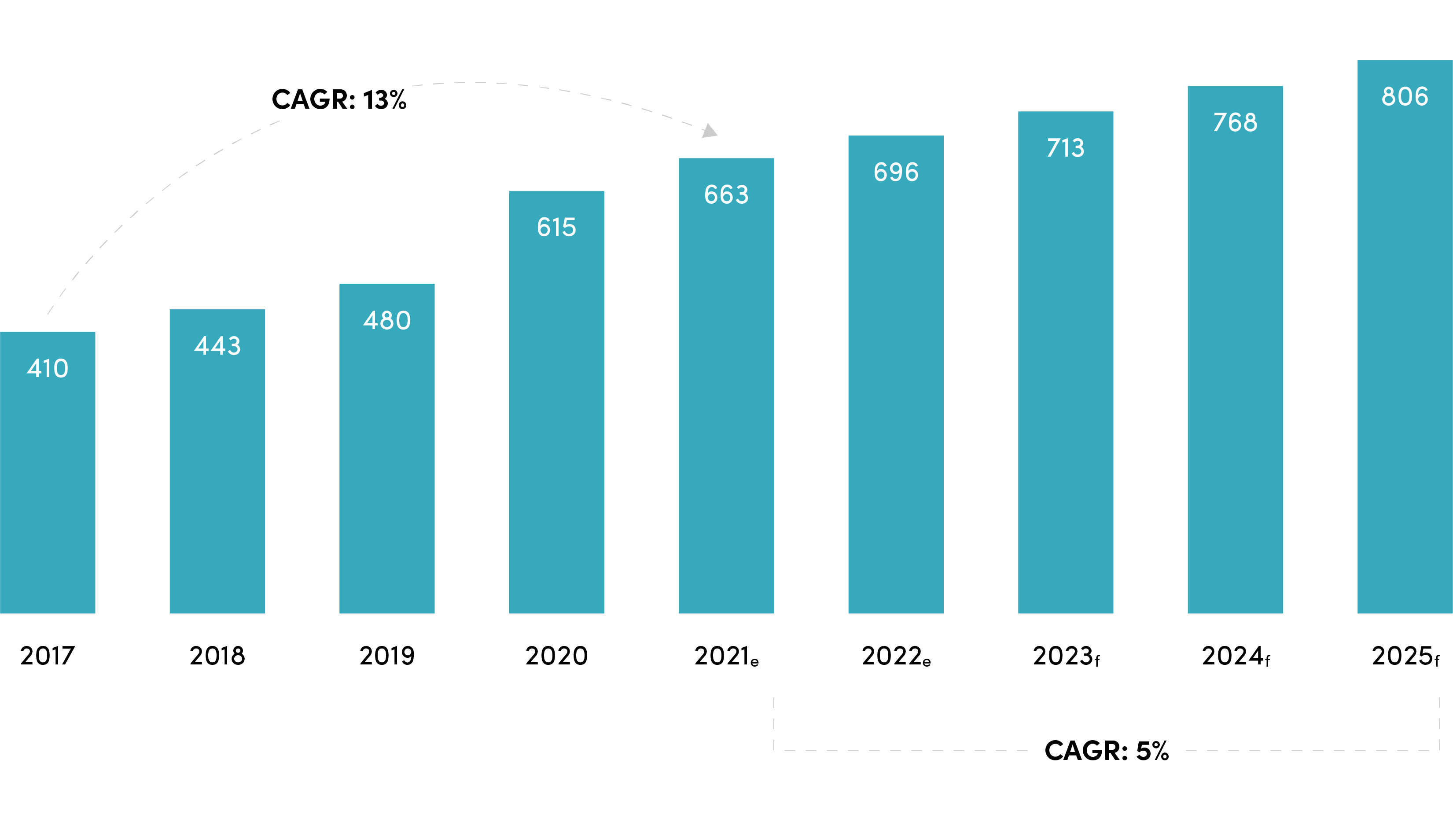
Growth forecasts for investments in TV-VOD series and films
(€ mln at nominal values)
Source: eMedia for APA
If the current market trends, which show a strong increase in domestic and international demand, should be confirmed, TV and VOD series and films investments will grow significantly, touching a 5% CAGR over the next 4 years.
Forecasts of investment evolution/development in TV-VOD series and films by broadcasters and global VOD operators
(€ mln at nominal values)
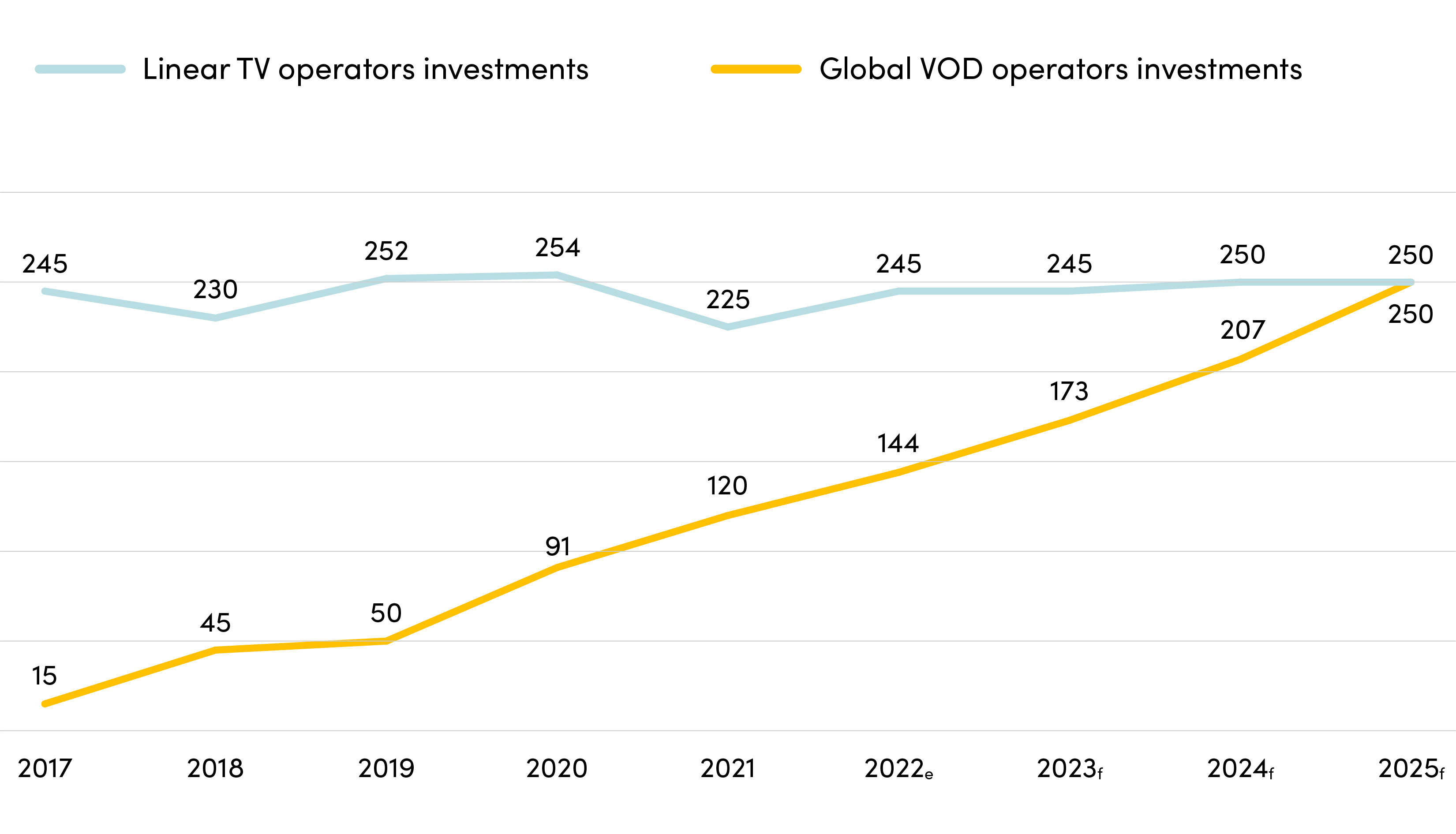
Global VOD operators take on an increasing role in the production of TV-VOD series and films while linear TV operators, especially free-to-air, gradually lose their historical role as protagonists of the domestic product with important economic, editorial and cultural consequences. By 2025, there could be a break-even, or even more, an “overtaking” in original fictional title investments (series and films).